Insurtech Global Outlook

In 2026, the insurance industry is navigating market volatility while accelerating the adoption of AI-driven models to strengthen resilience and trust. This is not simply a response to disruption. It reflects a deeper transformation, where insurers move beyond paying claims to architecting resilience through risk intelligence, responsible autonomy, prevention, and sovereign ecosystems

Bruno Abril, Head of Insurance at NTT DATA Inc. - Global​

Four core strategic imperatives​

The 2026 insurance landscape is framed around our interconnected strategic pillars:​

Insurance must evolve from annual pricing and reactive indemnification tocontinuous sensing and proactive control. Through the 3D Framework (Detect–Decide–Defend), insurers deployreal-time underwriting, satellite intelligence, IoT monitoring, and AI-driven prevention to manage complex,interconnected risk systems.​

The customer relationship shifts from transactional to participatory. Insurers adopthyper-personalized, usage-based models powered by telematics, wearables, biometrics and contextual AI.Prevention economics replaces pure indemnification, embedding empathy, transparency, and proactiveengagement into every interaction.​

AI is moving from copilots to coordinated agents that complete workacross underwriting, claims and service end-to-end. The prize is speed and productivity; the constraint is trust.Human-orchestrated autonomy pairs agentic workflows with governance explainability, audit trails, securitycontrols and clear accountability.​

Growth now happens in ecosystems: platforms,brokers, MGAs, reinsurers and data partners. Winners build a partner-ready standard APIs, connect withtechnology frontier, consent flows and launch new propositions in weeks, not months. Open Insurance turnscollaboration into a repeatable capability, and protects the customer relationship, durably.​

1

Become architects of resilience

Insurance must evolve from annual pricing and reactive indemnification tocontinuous sensing and proactive control. Through the 3D Framework (Detect–Decide–Defend), insurers deployreal-time underwriting, satellite intelligence, IoT monitoring, and AI-driven prevention to manage complex,interconnected risk systems.​

2

Deliver empathy at scale

The customer relationship shifts from transactional to participatory. Insurers adopthyper-personalized, usage-based models powered by telematics, wearables, biometrics and contextual AI.Prevention economics replaces pure indemnification, embedding empathy, transparency, and proactiveengagement into every interaction.​

3

Adopt balanced trust & responsible AI

AI is moving from copilots to coordinated agents that complete workacross underwriting, claims and service end-to-end. The prize is speed and productivity; the constraint is trust.Human-orchestrated autonomy pairs agentic workflows with governance explainability, audit trails, securitycontrols and clear accountability.​

4

Orchestrate value beyond boundaries of insurance

Growth now happens in ecosystems: platforms,brokers, MGAs, reinsurers and data partners. Winners build a partner-ready standard APIs, connect withtechnology frontier, consent flows and launch new propositions in weeks, not months. Open Insurance turnscollaboration into a repeatable capability, and protects the customer relationship, durably.​

INSIGHT 1: BECOME ARCHITECTS OF RESILIENCE

NEXT-GEN INSURANCE

From Legacy Constraints to Adaptive Operations

The era of static risk management is over as insurers face increasing pressure to modernize technology, improve agility and respond faster to changing market conditions.

With up to 70% of IT budgets still spent maintaining legacy systems, insurers must redirect investment toward resilience and innovation.

RISK REDEFINED

From Catastrophe Recovery to Continuous Resilience

Climate volatility, extreme weather events and rising protection gaps are forcing insurers to rethink how risk is assessed, managed and mitigated.

More than $100 billion in uninsured catastrophe losses highlights the growing need for resilience-based insurance models.

PREVENTION FIRST

From Paying Claims to Preventing Losses

The future of insurance will increasingly depend on proactive risk prevention rather than traditional models focused primarily on claims settlement.

Already 45% of insurers are prioritizing prevention-led operating models to reduce losses and improve customer outcomes.

1. INSIGHT 1: BECOME ARCHITECTS OF RESILIENCE plus

NEXT-GEN INSURANCE

From Legacy Constraints to Adaptive Operations

The era of static risk management is over as insurers face increasing pressure to modernize technology, improve agility and respond faster to changing market conditions.

With up to 70% of IT budgets still spent maintaining legacy systems, insurers must redirect investment toward resilience and innovation.

RISK REDEFINED

From Catastrophe Recovery to Continuous Resilience

Climate volatility, extreme weather events and rising protection gaps are forcing insurers to rethink how risk is assessed, managed and mitigated.

More than $100 billion in uninsured catastrophe losses highlights the growing need for resilience-based insurance models.

PREVENTION FIRST

From Paying Claims to Preventing Losses

The future of insurance will increasingly depend on proactive risk prevention rather than traditional models focused primarily on claims settlement.

Already 45% of insurers are prioritizing prevention-led operating models to reduce losses and improve customer outcomes.

INSIGHT 2: DELIVER EMPATHY AT SCALE

PREVENTION ECONOMICS

From Reactive Coverage to Real-Time Protection

Connected insurance solutions and telematics programs are helping insurers create value long before a claim occurs.

Telematics-based programs can reduce insurance loss costs by up to 60% while strengthening customer engagement.

EMBEDDED VALUE

From Insurance Products to Invisible Protection

Embedded insurance is transforming how protection is distributed by integrating coverage directly into digital customer journeys.

The embedded insurance market is expected to surpass $700 billion globally as protection becomes increasingly contextual.

CUSTOMER EXPECTATIONS

From Policy Holders to Digital Consumers

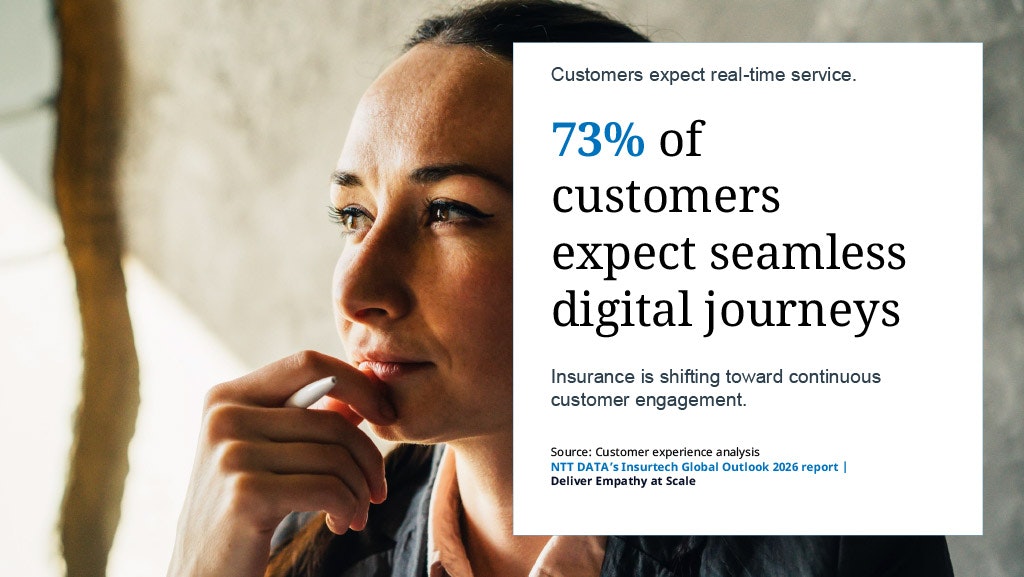
Digital-first customers increasingly expect insurance experiences that match the speed, simplicity and personalization offered by leading technology brands.

Today 73% of customers expect seamless digital experiences across every insurance interaction.

2. INSIGHT 2: DELIVER EMPATHY AT SCALE plus

PREVENTION ECONOMICS

From Reactive Coverage to Real-Time Protection

Connected insurance solutions and telematics programs are helping insurers create value long before a claim occurs.

Telematics-based programs can reduce insurance loss costs by up to 60% while strengthening customer engagement.

EMBEDDED VALUE

From Insurance Products to Invisible Protection

Embedded insurance is transforming how protection is distributed by integrating coverage directly into digital customer journeys.

The embedded insurance market is expected to surpass $700 billion globally as protection becomes increasingly contextual.

CUSTOMER EXPECTATIONS

From Policy Holders to Digital Consumers

Digital-first customers increasingly expect insurance experiences that match the speed, simplicity and personalization offered by leading technology brands.

Today 73% of customers expect seamless digital experiences across every insurance interaction.

INSIGHT 3: ORCHESTRATE VALUE BEYOND BOUNDARIES

CONNECTED INSURANCE

From Individual Firms to Networked Value

Insurance innovation is increasingly driven by partnerships, ecosystems and data-sharing models that extend beyond traditional industry boundaries.

Around 63% of insurers see ecosystems as a key driver of future growth and innovation.

CAPITAL IN MOTION

From Isolated Innovation to Scalable Growth

Investment continues to flow toward business models that combine technology, data and partnerships to create new sources of value.

Global Insurtech investment exceeded $4 billion in 2025, reinforcing confidence in ecosystem-led innovation.

AI-DRIVEN GROWTH

From Digital Startups to Intelligent Businesses

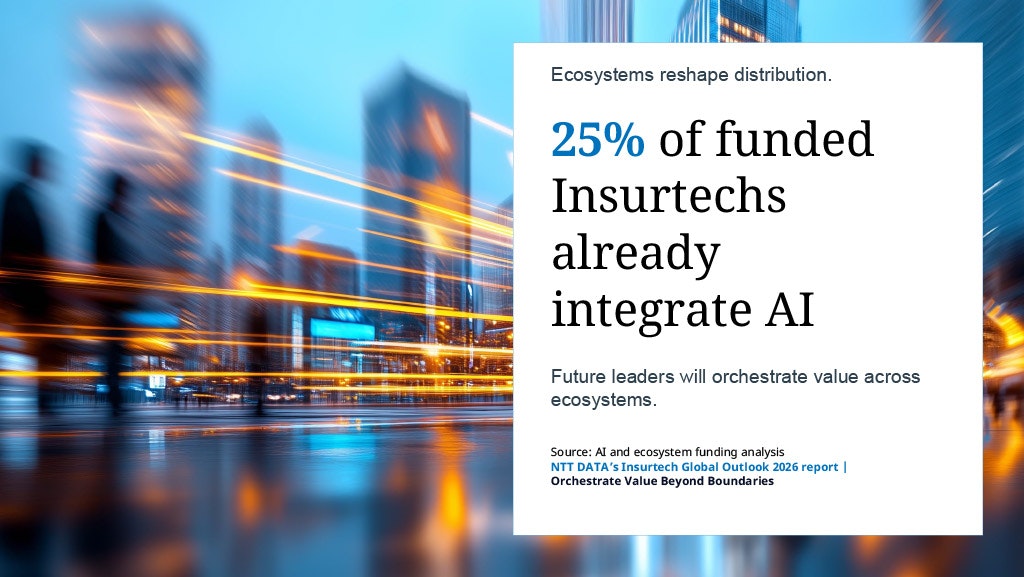
Artificial intelligence is rapidly becoming a foundational capability across the global Insurtech landscape.

Already 25% of funded InsurTechs have embedded AI into their products, services or operating models.

3. INSIGHT 3: ORCHESTRATE VALUE BEYOND BOUNDARIES plus

CONNECTED INSURANCE

From Individual Firms to Networked Value

Insurance innovation is increasingly driven by partnerships, ecosystems and data-sharing models that extend beyond traditional industry boundaries.

Around 63% of insurers see ecosystems as a key driver of future growth and innovation.

CAPITAL IN MOTION

From Isolated Innovation to Scalable Growth

Investment continues to flow toward business models that combine technology, data and partnerships to create new sources of value.

Global Insurtech investment exceeded $4 billion in 2025, reinforcing confidence in ecosystem-led innovation.

AI-DRIVEN GROWTH

From Digital Startups to Intelligent Businesses

Artificial intelligence is rapidly becoming a foundational capability across the global Insurtech landscape.

Already 25% of funded InsurTechs have embedded AI into their products, services or operating models.

INSIGHT 4: ADOPT BALANCED TRUST & RESPONSIBLE AI

CONNECTED INSURANCE

From Experimentation to Enterprise Adoption

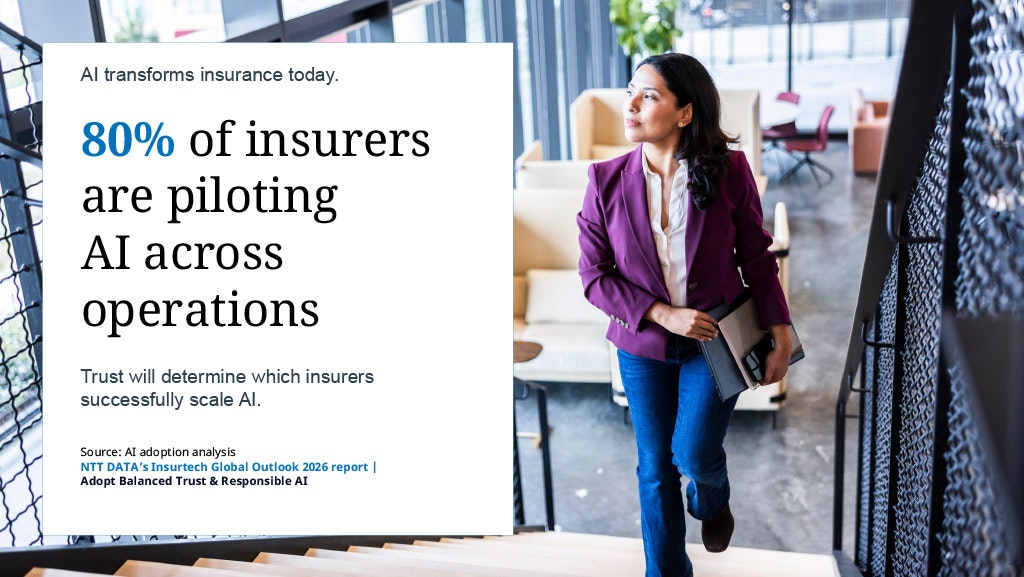
Artificial intelligence has moved beyond experimentation and is becoming a strategic priority across the insurance value chain.

More than 80% of insurers are actively piloting AI initiatives across business and technology functions.

CAPITAL IN MOTION

From Innovation Pressure to Responsible Execution

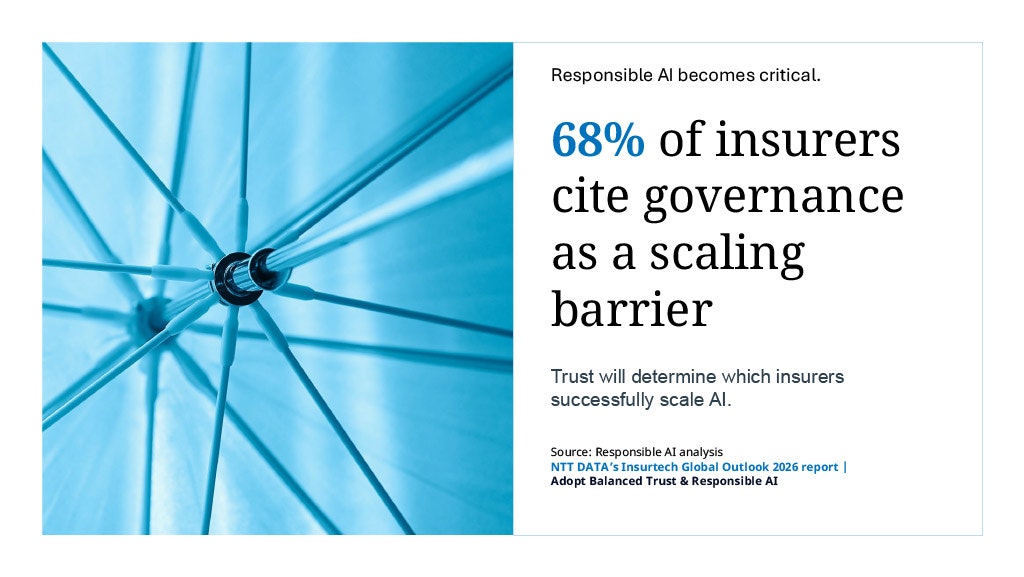
As AI adoption accelerates, governance, transparency and accountability are becoming essential requirements for insurance organizations.

Nearly 68% of insurers identify governance and compliance as barriers to scaling AI successfully.

AI-DRIVEN GROWTH

From Human Workflows to Intelligent Autonomy

Agentic AI is introducing new possibilities for autonomous decision-making, intelligent workflows and operational transformation.

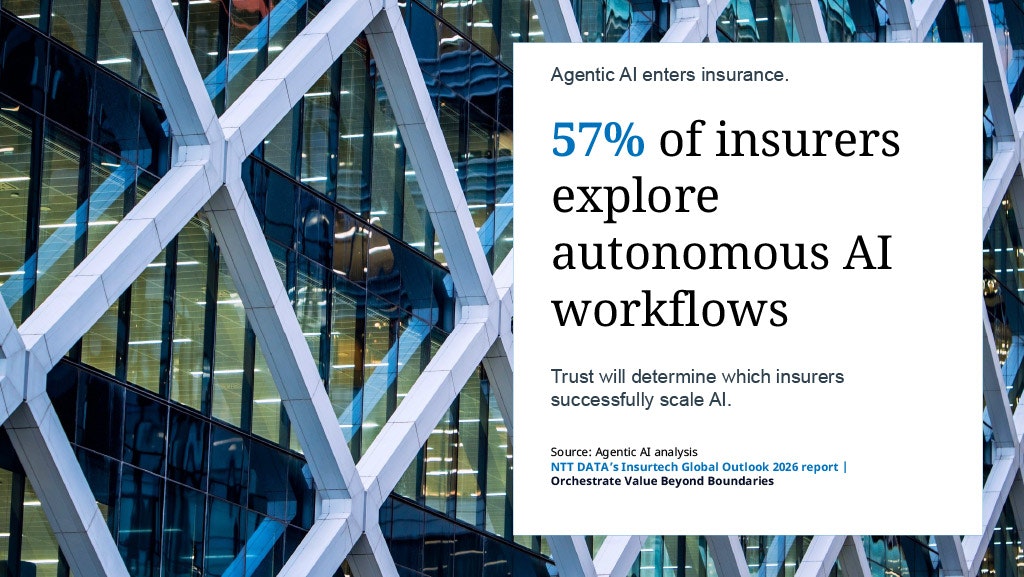
Approximately 57% of insurers are already exploring autonomous and agentic AI use cases.

4. INSIGHT 4: ADOPT BALANCED TRUST & RESPONSIBLE AI plus

CONNECTED INSURANCE

From Experimentation to Enterprise Adoption

Artificial intelligence has moved beyond experimentation and is becoming a strategic priority across the insurance value chain.

More than 80% of insurers are actively piloting AI initiatives across business and technology functions.

CAPITAL IN MOTION

From Innovation Pressure to Responsible Execution

As AI adoption accelerates, governance, transparency and accountability are becoming essential requirements for insurance organizations.

Nearly 68% of insurers identify governance and compliance as barriers to scaling AI successfully.

AI-DRIVEN GROWTH

From Human Workflows to Intelligent Autonomy

Agentic AI is introducing new possibilities for autonomous decision-making, intelligent workflows and operational transformation.

Approximately 57% of insurers are already exploring autonomous and agentic AI use cases.

.

Four industry snapshot: the state of insurance in 2026​

🔹 Risk complexity is widening the protection gap, with $162B in NatCatlosses (H1 2025) and a $4.88M average data breach cost.​

🔹 54%+ of adults use Generative AI, reshaping expectations towardinstant, personalized experiences.​

🔹 Prevention-led models are improving loss ratios and operationalefficiency through real-time sensing and dynamic underwriting.​

🔹 Collaboration across insurers, insurtechs, and ecosystem partners isaccelerating platform transformation and embedded growth.

Insurtech Global Outlook 2026 Highights

Download

Our Sponsors